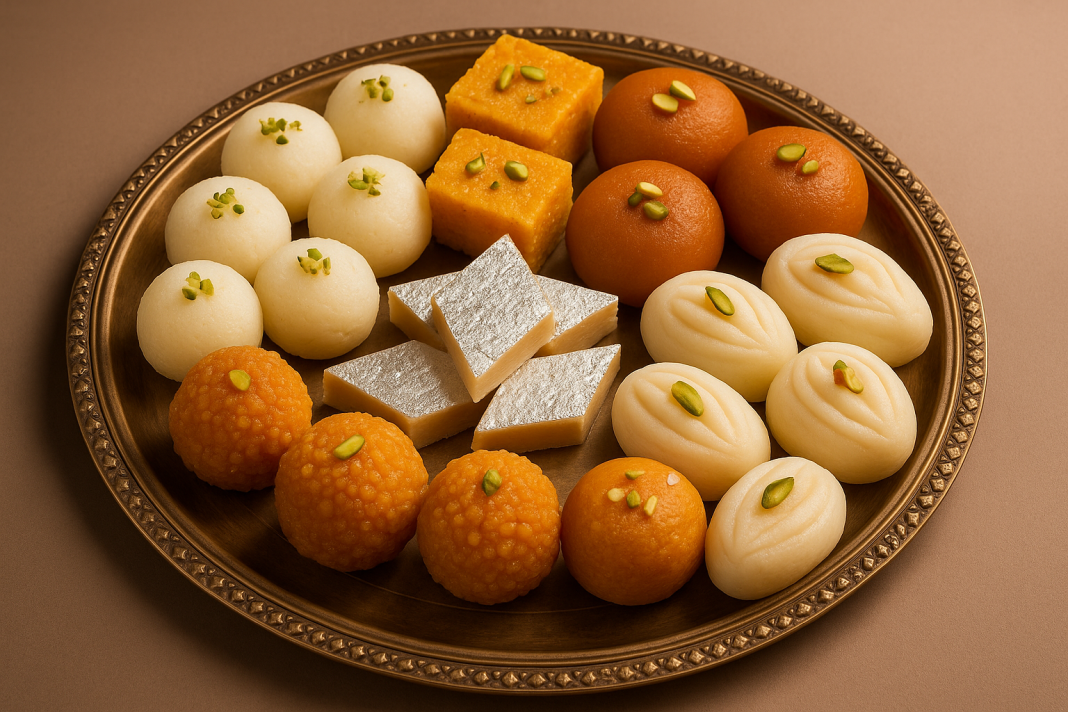

Bengal is one of the regions that has contributed most to India’s sweet legacy, despite the country’s broad and varied culinary environment. Bengal, which includes Bangladesh and the Indian state of West Bengal, is a region in eastern India that is well-known for its rich, creamy, and frequently milk-based sweets. Bengali sweets are more than just desserts; they are an essential component of the region’s culture, holidays, and daily existence.
Every Bengali dessert, from the sticky Rasgulla to the crispy Sandesh, has a history, a custom, and a method. We delve deeply into the wonderful world of Bengali sweets in this post, covering their history, preparation, cultural significance, and the finest ones to try if you’re just starting out.
Bengal’s Sweet Soul
In Bengali homes, sweets, or “mishti” as they are known in Bengali, have a special position. Sweets are always a part of any event, be it a business deal, a festival, a wedding, or a simple get-together. They stand for happiness, love, and good fortune.
Bengali sweets are mostly dairy-based, with chhena (curdled milk solids), milk, and ghee as the primary components, in contrast to other Indian sweets that are either flour-based or nut-heavy. Their flavours are well-balanced and never overpowering, and their texture is usually delicate and soft.
The Foundation of Many Bengali Sweets: The Art of Chhena
The essence of Bengali sweets is chhena. Chhena is moist, gritty, and flexible, which makes it ideal for shaping into a variety of confections. This contrasts with paneer, which is pressed and firm. It is prepared by curdling heated milk with vinegar or lemon juice, then filtering the resulting whey.
Chhena preparation is regarded as an art form. The curds need to be kneaded just enough to become smooth but not oily, and they shouldn’t be too moist or too dry. The distinctive melt-in-your-mouth texture of Bengali sweets is a result of this balance.
Rasgulla: The Bengali Sweets King
Made from chhena and soaked in a light sugar syrup, Rasgulla (also spelt Rasogolla) is a spongy, white, ball-shaped treat that is arguably the most well-known of all Bengali sweets. It has deep roots in Bengali cuisine, yet its origins are frequently debated between Bengal and Odisha.
The following is the key to a delicious rasgulla:
The crunchy yet soft texture,
The syrup’s lightness, and
how the chhena is boiled and kneaded.
Rasgullas are typically served cold and topped with cardamom or rose water.
Sandesh: Elegance Meets Minimalism
Sandesh, another traditional Bengali dessert, epitomises simplicity. There are dozens of versions of Sandesh, which is made with just chhena and sugar and occasionally flavoured with cardamom, saffron, or jaggery. Sandesh, as opposed to syrup-soaked rasgullas, is usually dry or semi-moist and frequently shaped into beautiful shapes.
Among the well-liked types of Sandesh are:
Kanchagolla: wet and tender
Date palm jaggery is used to make Nolen Gur Sandesh.
Abar Khabo is a two-layered confection that conveys the message, “I want more.”
Combining chhena and boondi, Motichur Sandesh
Mishti Doi: The Delight of Fermentation
Mishti Doi, a fermented, sweetened yoghurt that doubles as a comfort food and dessert, must be mentioned in any discussion about Bengali sweets. Mishti Doi is traditionally placed in earthen pots, where the clay contributes a unique scent and the slow evaporation of moisture gives it a rich, thick texture.
It is usually sweetened with jaggery or caramelised sugar, which gives it a pale brown colour. It is typically served at the conclusion of meals or consumed on hot summer days because it is creamy and chilled.
Cham Cham: The Vibrant Delight
This cylindrical candy, often called chamcham or chomchom, is denser than rasgulla. Made from chhena, it is usually grated coconut or mawa (milk solids) and simmered in sugar syrup. For an added festive touch, it can occasionally be stuffed with dry fruits or khoya and painted pink, orange, or yellow.
Popular in Bangladesh and West Bengal, cham cham is frequently included in gift boxes for special occasions.
Compare Rasgulla to Rajbhog and See the Difference
Rajbhog may appear to be a larger Rasgulla at first, but there is more to it than that. To enhance its flavour, rajbhog is filled with cardamom, dry fruits, and occasionally saffron. Usually served at festivals and weddings, it gets its golden hue from saffron or food colouring.
Because of its rich filling, rajbhog is designed to be consumed slowly and has a thicker texture.
Ledikeni and Pantua: Fried Syrupy Heaven
Pantua is a syrup-soaked fried dessert that is similar to Gulab Jamun but prepared with chhena. Cardamom gives it a caramelised rim and a juicy interior when it is perfectly deep-fried.
A variety called Ledikeni has the name of Lady Canning, a British governor-general’s wife. According to legend, Bengali confectioners made this treat in her honour, and it has remained well-liked ever since.
The Wonder of Winter, Pati Shapta
Bengali families look forward to making Pati Shapta, which are thin crepes stuffed with delicious coconut, khoya, and jaggery, during Poush Parbon, the winter harvest celebration. These crepes are frequently served with mishti doi on the side or drenched in condensed milk.
Bengali cuisine’s seasonal richness and rustic beauty are exemplified by Pati Shapta and other pithas like Gokul Pithe and Dudh Puli.
Nolen Gur: Winter Sweets’ Hidden Ingredient
Bengal becomes a jaggery land when winter arrives. Date palms yield a golden elixir known as Nolen Gur, or date palm jaggery. It complements nearly every Bengali delicacy with its deep, smokey flavour.
Uses for Nolen Gur include:
Sandesh
Rasgulla
Rice pudding (payesh)
Modern variations of cakes and puddings
Due to their seasonal availability, Nolen Gur candies are highly sought-after limited-edition treats.
Contemporary Takes on Traditional Bengali Sweets
Bengali sweets are being creatively reinterpreted as culinary trends change. Home cooks and renowned patisseries are experimenting with:
Sandesh Chocolate
Cheesecake with Rasgulla
Fusion desserts including mousse from Mishti Doi
Nolen Gur with tiramisu
Bengali sweets are now more widely available to audiences around the world because to these hybrids that respect tradition while catering to cosmopolitan tastes.
Bengali sweets are popular all over the world.
Bengali sweets are becoming more and more popular worldwide because of the diaspora and internet exports. Vacuum-sealed Rasgullas, frozen Sandesh, and even Mishti Doi in glass jars are now available in stores in New York, London, and Dubai.
By demonstrating how to prepare Bengali sweets at home or where to locate genuine equivalents overseas, food bloggers and YouTubers have also promoted Bengali sweets to a worldwide audience.
Home-Made Bengali Sweets
With a little perseverance and the correct method, you can make some Bengali sweets like Rasgulla or Sandesh at home, even though they can appear frightening. Some pointers are:
Made with full-fat milk, chhena
Don’t knead the chhena too softly or too firmly.
When boiling, keep the syrup’s proper consistency.
For authenticity, use earthen pots for Mishti Doi.
The possibilities are unlimited once you become proficient at chhena.
The Cultural Significance of Sweets in Bengali Culture Bengali sweets are more than just food; they are feelings that permeate every part of daily life. Without sweets, a Bengali celebration isn’t complete. Sweets signal the start of something new and delightful, whether it’s a baby shower or a work advancement.
Sweets even interrupt daily life, whether it’s presenting Rasgulla to guests, giving Sandesh to pals, or eating Mishti Doi after a meal. They are a component of language, hospitality, and identity. Good news is celebrated with the Bengali phrase “mishti mukh koro” (sweeten your lips).
In conclusion, a never-ending romance with sweets
More than just delicious treats, Bengali sweets are a reflection of the region’s love of custom, taste, and festivities. You’re having a piece of heaven whether you’re eating a bowl of cold Mishti Doi, a fudgy Sandesh, or a syrupy Rasgulla.