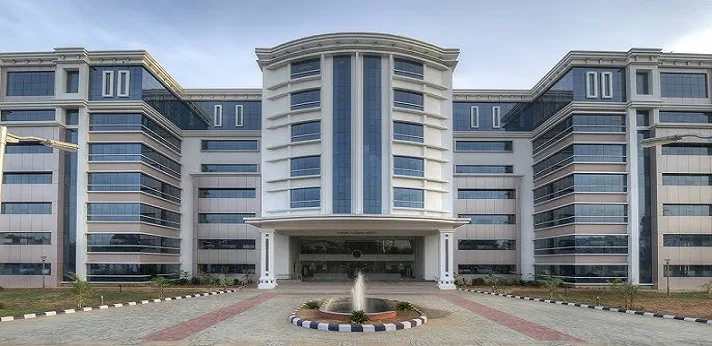
, which is located in Chennai, Tamil Nadu.)
One of India’s oldest and most prominent medical schools is Madras Medical College (MMC), which is located in Chennai, Tamil Nadu. With a long history spanning almost two centuries, the college was founded in 1835 and has made significant contributions to medical education, research, and healthcare services across the nation. Madras Medical College remains a shining example of medical excellence, renowned for its cutting-edge facilities, rigors academic programme, and history of producing highly qualified medical professionals. This article explores the college’s background, curricula, research projects, medical services, and significant contribution to the development of Indian medicine.
Historical Context and Establishment
As part of a larger effort to modernise medical education in India, Madras Medical College was established in 1835 while the country was still a British colony. The college started out as a modest establishment with the goal of teaching Western medicine to Indian practitioners. With time, it developed into a top medical school with extensive curricula and Government General Hospital (GGH), an attached facility that provides clinical experience and medical care.
The Location’s Significance: Chennai’s Medical Centre
Madras Medical College, situated in the centre of Chennai, enjoys the advantages of being in a thriving metropolis with a diversified populace. Chennai, which has several specialised hospitals and research facilities, is referred to as the “Health Capital of India.” Collaboration with other medical and research institutes, patient diversity, and comprehensive clinical exposure are all made possible by MMC’s advantageous location.
Academic Programmes Available
Numerous undergraduate, graduate, and doctoral programmes in a range of medical and allied health specialities are available at Madras Medical College. Some of the best students from all around the nation are drawn to the highly competitive flagship MBBS (Bachelor of Medicine, Bachelor of Surgery) programme. MD, MS, MCh, and diploma programmes in general medicine, surgery, paediatrics, obstetrics and gynaecology, and other specialities are examples of postgraduate studies. MMC also provides paramedical, physiotherapy, and nursing courses.
The Admissions and Selection Procedure
The National Eligibility cum Entrance Test (NEET), a national examination that chooses applicants on the basis of merit, is the main method of admission to Madras Medical College. Only highly competent students are admitted to the college thanks to the stringent selection procedure. In order to preserve a diverse student body, the college reserves places for individuals who meet the state and all-India quotas.
Campus Facilities and Infrastructure
The expansive campus of Madras Medical College is furnished with research facilities, simulation labs, well-stocked libraries, and contemporary lecture rooms. The campus offers students a stimulating environment that encourages creativity and learning. Excellent clinical facilities, such as specialised departments, emergency rooms, intensive care units, and state-of-the-art diagnostic labs, are available at the attached Government General Hospital.
Excellence in Teaching and Faculty
The faculty at the institution is made up of distinguished and experienced instructors, many of them are leaders in their disciplines. Faculty members actively participate in clinical practice, research, and teaching while offering students all-encompassing supervision. Effective learning and individualised mentoring are made possible by the student-teacher ratio.
Investigations and Developments
Madras Medical College places a high priority on research, making substantial contributions to medical science through epidemiological studies, clinical trials, and creative medical solutions. In order to address urgent health issues such infectious diseases, non-communicable diseases, maternity and child health, and public health difficulties, the institution works with national and international research bodies. Both academics and students are encouraged to attend conferences and publish research papers.
Government General Hospital: Medical Education and Treatment Provision
One of the biggest government hospitals in India is the Government General Hospital, which is a part of Madras Medical College. A sizable portion of Chennai’s population, particularly those from economically challenged areas, receives comprehensive medical care from this teaching hospital. With specialities including cardiology, neurology, oncology, orthopaedics, and more, the hospital manages a large patient load. Students who participate in clinical training at GGH have exposure to a variety of medical issues and acquire practical skills.
Initiatives for Community Health
Health camps, awareness campaigns, and vaccination drives are just a few of the community health initiatives in which Madras Medical College actively takes part. Particularly in underprivileged communities, the college’s public health department is essential to the prevention of disease and the promotion of health. By taking part in these outreach initiatives, students acquire invaluable experience while cultivating social responsibility and empathy.
The Contributions of Alumni
Madras Medical College graduates have significantly advanced medicine both domestically and abroad. Many have gone on to become distinguished researchers, educators, clinicians, and legislators. Current students can engage with seasoned professionals through the alumni network, which provides a forum for professional growth and cooperation.
Contribution to Reforms in Medical Education
In order to improve curriculum, paedagogy, and evaluation techniques, Madras Medical College has been leading the way in adopting medical education changes. To prepare students for the needs of contemporary healthcare, the institution emphasises skill-based learning, supports evidence-based medicine, and incorporates technology into its teaching.
Obstacles and Opportunities for the Future
MMC has issues such resource limitations, infrastructure growth, and keeping up with the quickly changing medical technologies, just like many other government healthcare facilities. Nonetheless, the college is well-positioned for future expansion and success thanks to sustained modernisation initiatives, government assistance, and strategic alliances.
Effects on Indian and Tamil Nadu Healthcare
Madras Medical College’s influence goes beyond its scholarly accomplishments. The organisation has greatly enhanced health outcomes in Tamil Nadu and helped the country achieve its public health objectives by educating thousands of medical professionals and offering high-quality healthcare services.
Extracurricular Activities and Student Life
Academics are not the only aspect of life at Madras Medical College. Sports, cultural events, medical societies, and volunteer organisations are just a few of the extracurricular activities in which students take part. These exercises promote leadership, cooperation, and all-around growth.
Using Technology in Medical Education
Madras Medical College has incorporated cutting-edge technologies like digital pathology, telemedicine, and virtual simulation labs into its educational programmes to stay up to date with international standards. These resources improve staff and student diagnostic proficiency and patient care abilities.
Partnerships and Cooperation
For research and teaching, MMC works with prestigious organisations such as the World Health Organisation (WHO), the Indian Council of Medical Research (ICMR), and several universities. These collaborations give students access to cutting-edge advancements and promote the sharing of information.
Participation in Medical Emergencies
Government General Hospital and Madras Medical College have been instrumental in responding to health emergencies, such as the COVID-19 pandemic. The organisation showed tenacity and dedication to public health by managing patient care, testing, immunisation campaigns, and research.
Patient Care and Ethical Practices MMC places a strong emphasis on compassionate patient care and ethical medical practice. Medical ethics education is part of the curriculum, and the institution upholds norms that put patient privacy, dignity, and informed consent first.
Madras Medical College as a Foundation of Indian Medical Excellence: A Conclusion
India’s long history of providing healthcare and medical education is exemplified by Madras Medical College. It is an essential institution because of its long history of quality, forward-thinking approach to innovation, and commitment to community service. Madras Medical College is committed to developing the next generation of healthcare professionals who would drive breakthroughs in healthcare and improve society as it develops further.